


Leading international experts analyze important Chinese documents and policies.
Newly translated documents discussed in these analyses include:
- The “Donroe Doctrine” in the Era of Great Power Competition by Fan Jishe, Vice Dean and Professor, Institute of Strategic Studies, Central Party School of the Communist Party of China.
- Characteristics and Reflections of the U.S. Military Invasion of Venezuela by Xu Shuai, Director of the Teaching and Research Office and Professor, International College of Defense Studies, People’s Liberation Army National Defense University.
- The Interactive Effects of “Donroe Doctrine” Interference and the Rise of the New Right in Latin America by Yang Shouguo, Chief Researcher, Institute of Latin American Studies, China Institutes of Contemporary International Relations.
- The Multiple Impacts of U.S. Policy on Latin America by Zhou Zhiwei, Director of the International Relations Department and Researcher, Institute of Latin American Studies, Chinese Academy of Social Sciences.
- The Oil Motives Behind U.S. Military Intervention by Zhao Hongtu, Director and Researcher, Energy Security Research Center, China Institutes of Contemporary International Relations.
- Venezuela’s Oil and Gas Resources and International Investment Disputes by Zha Daojiong, Professor, School of International Studies and the Institute of South-South Cooperation and Development, Peking University.
Jump to commentary from:
Antonio José Pagán Sánchez | Victoria Chonn Ching | Parsifal D’Sola

Postdoctoral researcher, Center for China and Asia-Pacific Studies and Professor, Universidad del Pacífico
As the sources reviewed here make clear, the military capture of Nicolás Maduro earlier this year has sent ripples through Chinese academia. Why should that matter? Because Chinese academic output is one of the most valuable windows the outside world has into the evolution of Chinese strategic thinking. It is precisely for that reason that I have spent the past several years doing a deep dive into the China National Knowledge Infrastructure (CNKI)—China’s main academic repository, which is increasingly difficult to access from outside the country—focusing specifically on the China-Latin America literature published by Chinese scholars since 2009.
In broad strokes, the articles I obtained in CNKI tended to hit familiar notes: the win-win framing of China–Latin America relations, the gradual deepening of political ties between the two sides, the importance of cultural diplomacy and soft power, and a persistent undercurrent of suspicion toward the United States, which is routinely cast as a disruptive force. On that last point, the articles we reviewed on the U.S. intervention in Venezuela show both continuity and potential fracture lines with what Chinese scholars have been writing about Latin America—and about what they habitually call “the USA factor.”
The most noteworthy continuity is the framing of the United States as a structural obstacle to the deepening of Chinese-Latin American relations. Notably, this suspicion of Washington long predates the Trump era—it was already firmly entrenched at least as far back as former President Barack Obama’s arrival in office in 2009. However, two significant absences stand out.
The first is the near-total lack of any framing of President Donald Trump’s Venezuela gambit as an opportunity for China. That is a striking—and paradoxical—omission. During his first term, despite the sharpening tensions between Washington and Beijing, President Trump was broadly viewed within Chinese academic circles as the U.S. president most likely to create openings for Chinese expansion in Latin America—largely because of the unpredictable nature of his foreign policy. The underlying logic was simple: Every aggressive move by Washington damaged the U.S. image in the region. By that reasoning, the forced capture of a sitting Latin American leader—arguably President Trump’s most aggressive intervention in the region to date—should have been the ultimate opportunity. And yet that sense of opportunity is nowhere to be found in the manuscripts we read. The tone is far more defensive: at best, these authors seem to hope that China can simply hold the line and preserve its existing position in Venezuela.
The second absence is equally telling. Missing entirely is any triumphalist narrative around the “de-Westernization” of the region—a prospect that quite a few Chinese scholars openly embrace, and one that sits neatly alongside President Xi Jinping’s own 2021 invocation of 东升西降 (The East is rising, and the West is declining). This is worth focusing on. One of the mechanisms these scholars have at times pointed to as a driver of de-Westernization is precisely this kind of assertive, heavy-handed action by Western powers in the region. And yet, faced with the spectacle of the United States forcibly capturing a sitting Latin American leader, that argument is conspicuously absent.
The takeaway? The U.S. intervention in Venezuela appears, at least for now, to have punctured some of the optimism that had characterized Chinese academic writing on Latin America in recent years. The fact that Maduro’s capture actually happened—and that it was, by any military measure, a success—seems to have ushered in a mood of caution in Chinese academia: more guarded, more defensive, and markedly more muted than the confident tone that had previously prevailed. Whether this is a genuine recalibration or merely a momentary flinch remains to be seen.

After the U.S. military operation in Venezuela on January 3, China’s immediate response was one of rejection, deeming it a “unilateral, illegal, and bullying” act. Aside from official diplomatic remarks, China did not offer any other significant response, to the confusion of those who expected more drastic action given China’s and Venezuela’s “all-weather strategic partnership.” For some regional experts, China’s response (or non-response) was representative of the country as an actor that observes and adjusts to different contexts.
A compendium published by the China Institutes of Contemporary International Relations (CICIR) in February 2026 provides greater insight into how Chinese scholars and policy analysts view U.S. actions in Venezuela, their implications for intraregional dynamics and China-Venezuela relations, and the place of Venezuela and Latin America and the Caribbean (LAC) within China’s priority list of international partnerships. While the LAC region plays an important economic and commercial role as a source of resources and as a market for Chinese exports and infrastructure overcapacity, CICIR’s compendium also underlines how the region can be a “strategic afterthought” from a geostrategic standpoint when compared with other regions, such as Southeast Asia and Europe.
China’s international engagements are complex, with diverse interests pursued by a range of Chinese actors. In the case of Venezuela, the interests of Chinese oil and gas companies are mainly at stake, as indicated in the translated document by Zhao Daojiong. However, the China-Venezuela relationship is not necessarily key for determining the fate of China-LAC relations, so it is unclear whether the Chinese state is motivated to pursue a more forceful strategy in Venezuela. Hence, caution is warranted when assessing the role that Venezuela plays in China’s engagement with LAC. Yet, the expansion of Chinese activity in areas of national interest in the region should also not be underestimated.
The translated texts can be divided in three themes: the “Trump Corollary” and its relationship with the U.S. military operation in Venezuela; the effects of this operation on Venezuela’s domestic politics and dynamics in the context of a rising “new right” in the region; and implications for the China-Venezuela relationship.
Fan Jishe, Yang Shouguo, and Zhou Zhiwei situate the U.S. approach to LAC in the context of the U.S. National Security Strategy in the Western Hemisphere. Despite the renewed emphasis on developing spheres of influence in the new foreign policy agenda, the U.S. return to Latin America also “serves the purpose of great power competition” when including U.S.-China dynamics, according to Fan. As such, although calling for the defense of the region’s autonomy, the authors appear to present Venezuela and LAC as spaces where the United States and China are pursuing economic and political goals, thus heightening their power competition and extending it to “third countries.” There is minimal discussion of local responses to the military operation, or the differences between and among the supporting and opposing sides both in Venezuela and regionally. When Yang and Zhou discuss these differences, they categorize them as representing tensions between left- and right-wing political movements in the region.
Yang and Zhou are correct in that a “new right” has emerged in LAC; however, they mischaracterize the complexity of political movement shifts in the region and the contexts under which they occur. There is also the assumption that a right-wing government would support Trump and his actions, while a left-wing administration would lean toward China. There is no mention of why part of the Venezuelan population supported the capture of Maduro, or why the Lima Group was established in 2017 and member countries rejected Maduro’s presidency. The simplification of how leftist and rightist governments choose certain international partnerships also overlooks the agency of LAC countries and their leaders. As shown by Argentine President Javier Milei and his right-leaning government, siding with the United States has not precluded the country from signing further trade deals with China. The challenge for Milei and other LAC leaders, including Venezuela’s interim government led by Delcy Rodríguez, is to decide how to balance interactions with the United States and China amid economic and political pressures as well as maintaining their countries’ sovereignty.
The closest discussion to Venezuela’s domestic conditions is offered by Xu Shuai, who explains the advanced preparation by U.S. forces before the operation and the weaknesses and failures of the Venezuelan intelligence and military. Xu recognizes the U.S. military success, but he also overestimates the domino effect this operation may have in the region and the inevitability of LAC turning against the United States. Xu and the other authors assume that LAC countries can be unified by common goals and ignore many of the historical challenges to regional integration. Leadership changes, uncertainty, and cycles of political crises have shown that trends of affiliation are not absolute or consistent.
Zhao Hongtu and Zhao Daojiong further delve into the implications of the military operation in Venezuela for Chinese interests and the China-Venezuela relationship. They underscore the role that oil has played as a motivating factor for U.S. actions and the impact for China’s businesses. While Zhao Hongtu underplays the effect the operation may have on Chinese investments in Venezuela, Zhao Daojiong believes in relying on international law and mechanisms to protect Chinese enterprises and their interests.
Although the readings acknowledge the U.S. success in the military operation in Venezuela, there is no certainty about China’s future strategy in the country. What is clear is that Venezuela is not a determinant in how China approaches the LAC region, which continues to be mainly viewed as economically strategic.
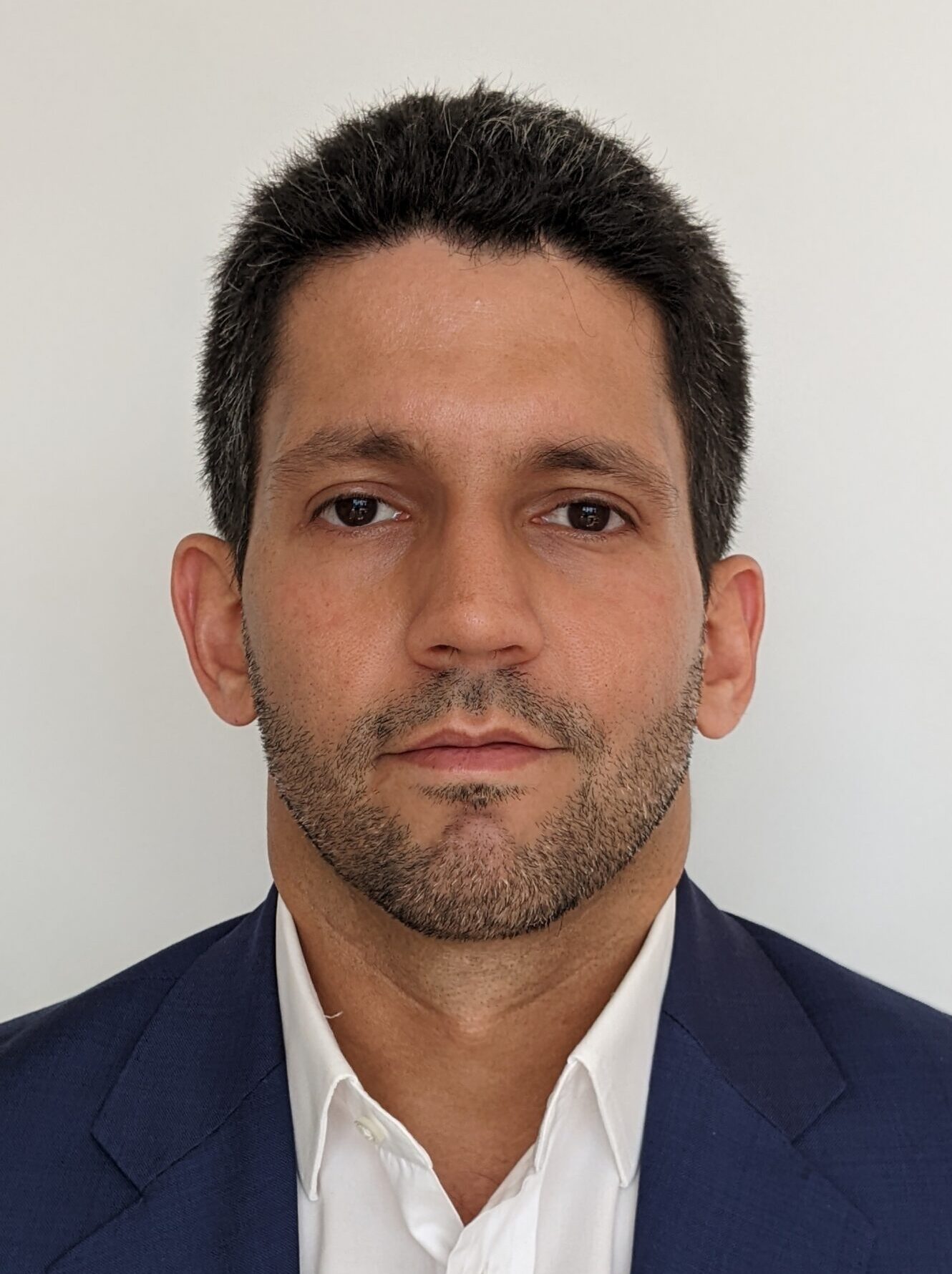
Founder and Executive Director, Andrés Bello Foundation – China Latin America Research Center
The United States’ January 3 military operation in Venezuela was bound to attract extraordinary attention in China. It has everything: a U.S. military buildup and operation, a sanctions regime, questions of international law, geopolitical competition, all unfolding in a country where China has—or at least used to have—a vested interest, and in a region where the United States exerts outsized influence. It is an ideal case through which to study and analyze China’s principal geopolitical rival close to its own sphere of influence. This focus on understanding the United States serves as a common thread across the six translated works discussed here.
Let us begin with the assumptions and perceptions that emerge from Beijing’s vantage point, according to the authors. The framing that runs through four of the six articles is that U.S.-China strategic competition will increasingly extend to third countries. Likewise, when assessing the United States’ strategy of “retreat and consolidation” in the Western Hemisphere, the authors understand this pivot as being driven largely byChina’s presence in Latin America and the challenge it poses to U.S. hegemony there.
This reflects a growing awareness that U.S.-China relations are entering a new phase and form of engagement, and that cases such as Venezuela should not be seen as anomalies of the Trump administration, but rather as signs of a paradigm shift in U.S. foreign policy. Moreover, the notion that great-power competition is the driving force behind U.S. foreign policy in Latin America can also be found in the work of many Latin American analysts—a rare convergence between two distinct perspectives in their assessment of U.S. actions and intentions.
Another common theme is the expectation that Latin America is entering a period of heightened political and economic instability, with implications for China’s engagement in the region. The United States is portrayed as an increasingly unpredictable and aggressive actor that will contribute to this instability. Unlike the relatively nuanced discussion of the U.S. National Security Strategy and its connection to the Venezuelan case, however, the authors’ treatment of broader regional instability and U.S.-Latin America relations is far less critical and often reverts to familiar official talking points, particularly the tendency to frame regional developments through a binary opposition between an interventionist United States and developing countries seeking greater autonomy.
For starters, Venezuela’s domestic political, economic, and military situation is entirely disregarded. This is consistent with China’s state-centric approach to international relations, but it leads to a skewed assessment of the domestic and regional dynamics that culminated in the events of January 3. This is a recurring feature of political commentary and academic analysis in China, where material and hard-power factors tend to receive greater attention than domestic political processes.
A similar omission is evident when discussing regional dynamics and U.S.-Latin America relations. The region’s shift to the right is largely described as part of a broader global trend, with little attention paid to its underlying causes. Questions such as why these countries have shifted to the right—and why many have moved closer to the United States—are left largely unexplored.
When explanations are offered, these developments are often attributed primarily to U.S. pressure or interference, leaving little room for the possibility that Latin American governments may be acting out of their own political calculations and national interests. Ironically, this results in a highly U.S.-centric reading of the region. It is also noteworthy that issues emphasized in U.S. policy debates, such as migration, drug trafficking, and organized crime, are portrayed as concerns primarily affecting the United States rather than challenges confronting much of Latin America itself.
One final observation deserves attention. Except for Zhou’s article, which ultimately reduces the discussion to the inevitable decline of U.S. hegemony in the region, the corpus contains surprisingly little party-speak. This is a refreshing departure from much of the Chinese academic literature on international affairs, which often remains largely descriptive and closely aligned with official narratives. While the articles reviewed here display important analytical blind spots, they also demonstrate a degree of critical engagement that is not always present in similar discussions. That makes the collection noteworthy beyond its treatment of Venezuela itself. Why these authors appear more willing to depart from conventional narratives is a question worth exploring, and perhaps the most intriguing one left unanswered by these texts.
To top